
A voice AI demo can sound flawless in a meeting room and still stumble in week one of a pilot. A caller asks, “Boleh check status saya, lah?” and the agent replies in an American accent, asks them to repeat in English, then reads their RM balance as “dollars”. The demo impressed; the pilot did not.
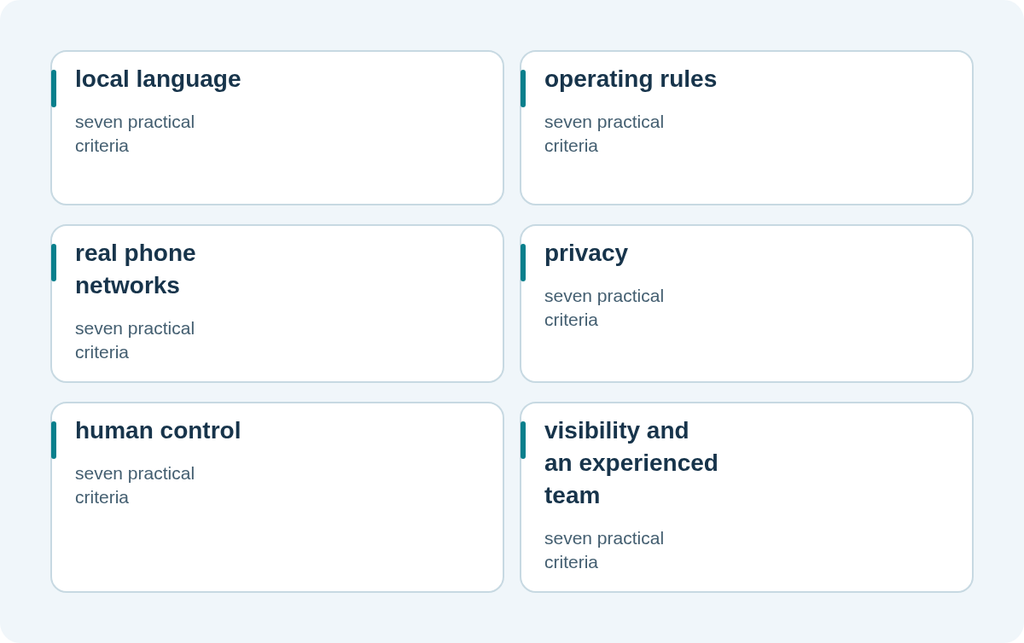
The best voice AI provider in Malaysia closes that gap on seven practical criteria: local language, operating rules, real phone networks, privacy, human control, visibility and an experienced team. Here is what each should look like, using Saloma as the worked example.
1. It sounds and listens like Malaysia
Malaysian callers mix Bahasa Malaysia, English, Mandarin, Cantonese, Tamil and slang, often in one sentence. Test for exactly that, not scripted English.
Saloma offers Malaysian, Malaysian Malay, Malaysian Indian and Malaysian Chinese English, plus Manglish-style, Singaporean and Singlish-style options. Its adaptive Malaysian English starts professional, then follows the caller’s style. “Sounds like” respellings help it pronounce Malay, Chinese and Indian names properly.
Picture a clinic helpline caller drifting from English into Bahasa Malaysia with a little Manglish. The agent follows along, yet reads the appointment date and phone number plainly and in full, because those details are never stylised.
2. It follows the rules Malaysian operators work under
Outbound calling, especially collections, carries regulatory duties. An agent that can dial without limits creates risk, not capacity.
Saloma’s built-in Malaysia debt-collection calling-rules pack applies at dial time, setting a calling window in the consumer’s time zone and limiting attempts per consumer across campaigns. It covers outbound calls placed through Saloma only, and it supports compliance work rather than establishing legal compliance.
Consider a collections manager at a lender: a consumer has already had this week’s attempts, so the pack holds the next dial. Before launch, the compliance officer should map each setting to the official regulatory text with legal advisers, not a vendor template.
BNM’s revised Fair Treatment of Financial Consumers policy, issued 27 March 2024, adds requirements on treating vulnerable consumers fairly. Voice agents in financial services should be designed with that in mind.
3. It works on real phone networks
Malaysian businesses run SIP trunks, PBX extensions and carrier numbers. A serious provider works there, not only in a browser tab.
Saloma’s console manages carrier trunks with a health check and re-registration, SIP extensions and exact inbound number routes. Outbound campaigns use an approved caller ID and calls-per-second limits. Web Talk adds a website call button with bot checks and a pre-call consent notice.
In a pilot, an IT head routes one existing number, reviews the trunk health check and heeds the console’s warning that a configured trunk isn’t necessarily registered. That checkpoint confirms fit before scaling.
4. It keeps sensitive conversations private by design
Helplines, clinics and complaint lines may need to avoid storing callers’ words at all. Privacy should be a choice made per line.
Saloma’s High Privacy mode, set per inbound phone agent, stores no per-call recordings, transcripts, caller memory or individual call history. Operations leads see delayed, anonymous daily summaries, with small totals withheld. Elsewhere, recording needs both tenant permission and the agent’s own setting, with separate retention periods.
Saloma’s guide advises against promising callers absolute anonymity, because phone networks and devices may keep their own records. Expect that candour from any provider.
5. It stays under human control
Automation earns trust when a person can step in at any moment. In Saloma, staff can listen to any AI call live and take over from their browser, transfer it blind or attended, or end it. New agents must be tested before customers hear them.
When a supervisor hears a caller growing upset, an attended transfer to a named colleague keeps the conversation moving without a cold restart.
6. You can see what it did and what it cost
An agent you can inspect is one you can defend to a manager, an auditor or a customer. Saloma’s console shows what the AI said, did and cost in one place. Each call carries an AI summary, a rating and decision records, and every change is audited. The reporting API never exposes caller numbers, transcript text or High Privacy agents, so external dashboards inherit the same boundaries.
See it in action Request a demo to explore how this could work for your team. Book a demo.
7. The people behind it have done this before
Long voice experience teaches that jitter, echo, one-way audio and bad handsets break more calls than any model, so systems must fail safe and recover. In Saloma, that shows as conservative limits, read-only demos, plain-language warnings and a public user guide.
Before choosing, ask:
- Does it handle my customers’ real language mix?
- Does it enforce calling windows and contact limits?
- Does it work with my numbers and PBX?
- Can sensitive calls go unstored?
- Can a person take over any call?
- Can I audit actions and costs?
- Has the team run voice systems for years?
A provider that answers all seven with something you can see in the console, not on a slide, has earned its place on your shortlist.